AI Brand assistant
Designing a trustworthy AI agent for brand governance and decision support
Background
Brand guidelines are complex, fragmented, and underused. Users struggle to find relevant rules, understand how they apply to their context, and verify compliance. A conversational interface was a natural fit — but it introduced real risk: a confident, wrong answer could directly damage brand integrity.

The challenge
This was never a technical feasibility problem — it was a trust problem. How do you stop an assistant from sounding certain when the answer is ambiguous? How do you keep the user in control instead of quietly outsourcing the decision to AI? How do you make the system's reasoning legible and contestable?
Early pilot data made the stakes clear: only 10% of users were satisfied, and 70% had no strong opinion either way — the assistant worked, but it hadn't earned credibility.
My role
I led design end to end — from concept to release — working closely with Product, Engineering, and Research. Beyond the UI, I defined the agent's boundaries, shaped its conversational behavior, and set the principles for transparency, confidence calibration, and user control that the rest of the team designed against.
Key decisions
A collaborator, not an authority. Early versions answered confidently even when guidelines were genuinely open to interpretation. We redesigned responses to reference source guidelines explicitly, surface uncertainty where context mattered, and prompt users to confirm rather than just accept — preserving agency instead of inviting blind trust.
Visible reasoning. Users couldn't tell why the assistant said what it said, which quietly eroded confidence. We made responses surface their sources, the specific guideline sections referenced, and the assumptions behind the answer.
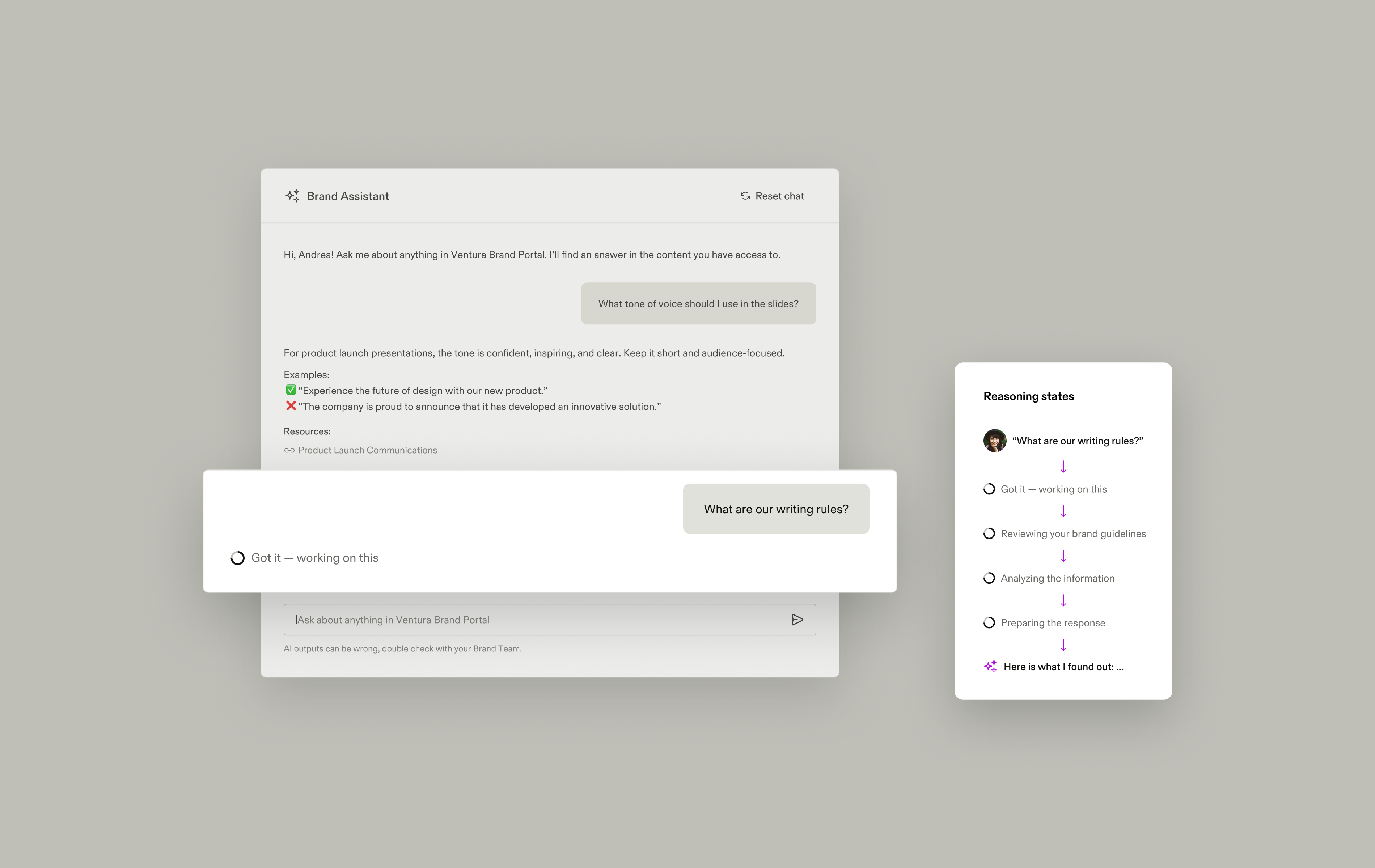
Calibration through iteration. A limited pilot surfaced exactly where the assistant felt too vague, too confident, or not actionable enough. Iterating on tone, structure, and response patterns significantly improved satisfaction and engagement, leading to a full release within the year.
Beyond Q&A
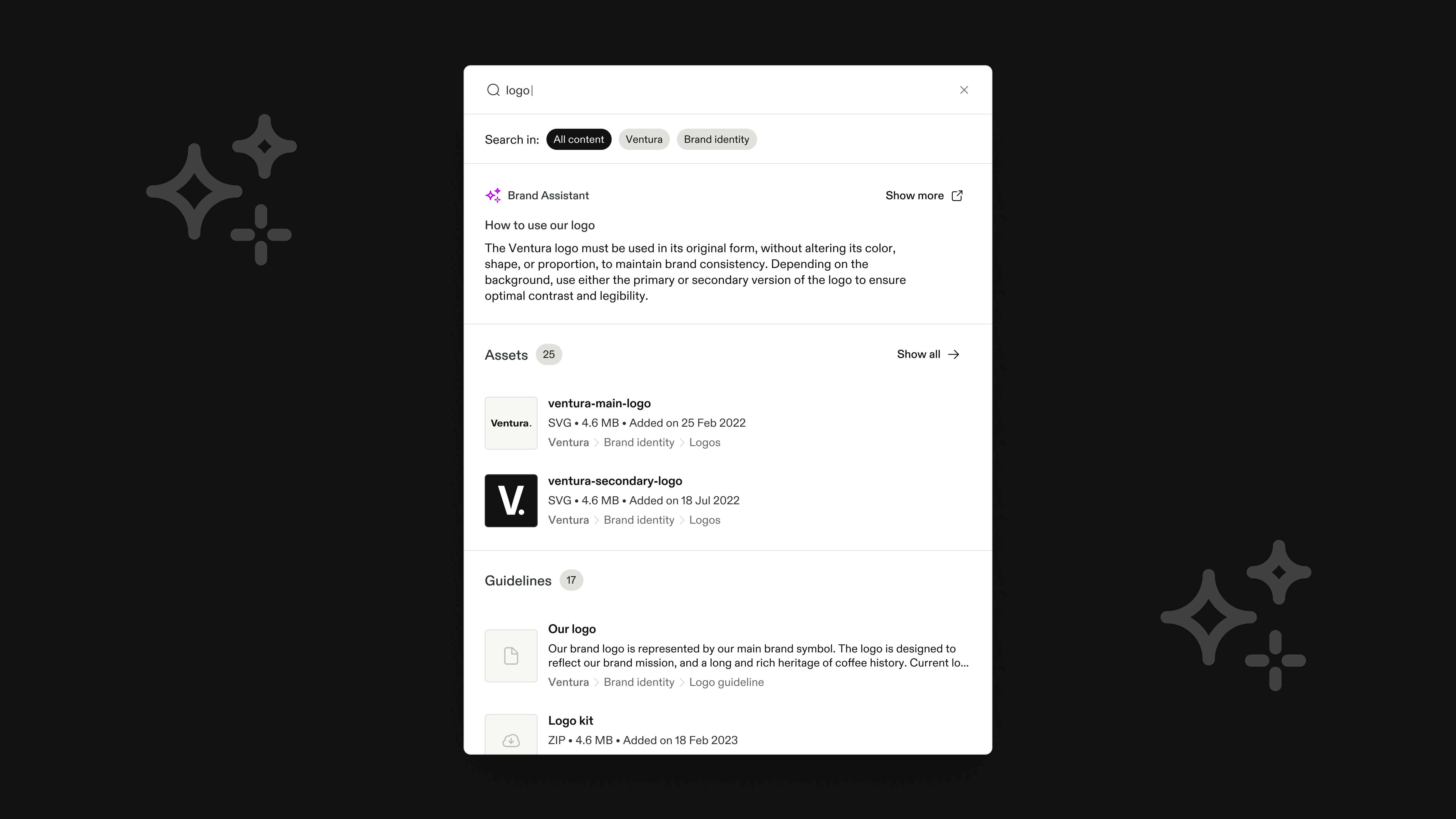
The assistant is now extending into natural-language asset search and conversational discovery — positioning it as an entry point into the platform, not just a chat window. I also explored how organizations could customize its tone and visual identity, reinforcing it as an extension of the brand team rather than a generic AI layer.
Impact
- Simplified access to complex brand guidelines through conversation
- Improved compliance by supporting informed, contextual decisions rather than blind ones
- Increased engagement by cutting friction in asset discovery and guideline navigation
- Established reusable conversational patterns and AI behavior principles now used across Frontify's other AI features

© Anna Lukyanchenko 2025 — all rights reserved